Treat Your Lithium Battery Right, and It Will Stay Like New for Years
2026-09-30 09:51:36


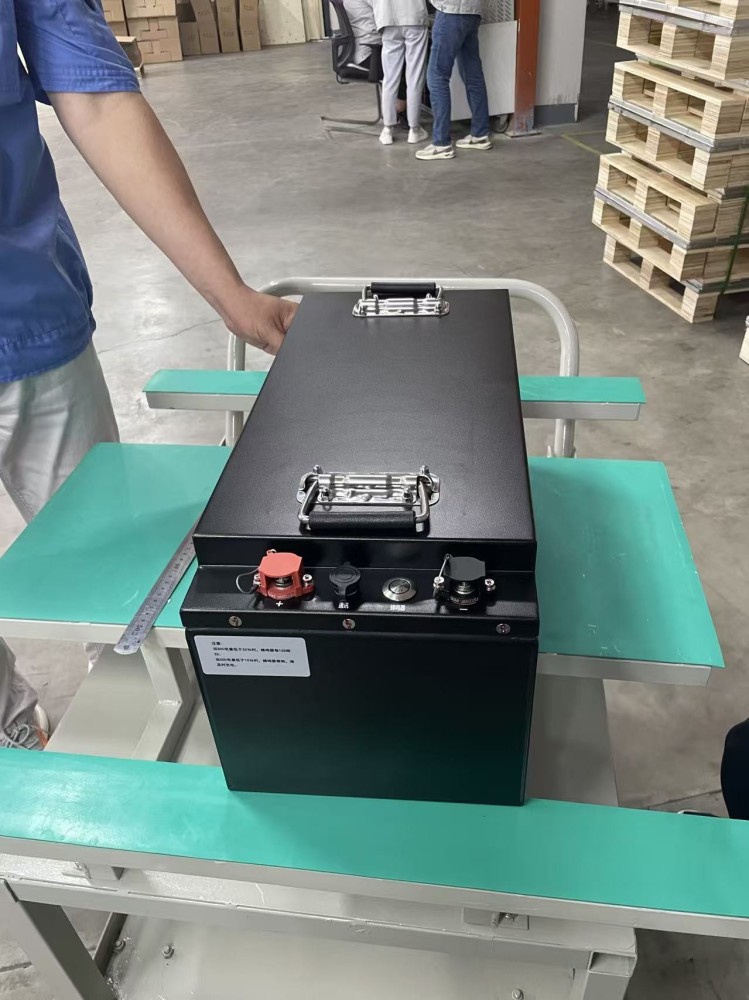
Treat Your Lithium Battery Right, and It Will Stay Like New for Years
Three Questions to Ask Before Switching to Lithium Batteries
Electric three- and four-wheelers are quietly consuming vast quantities of lithium batteries.
Are you ready for the reduction in export tax rebates for lithium batteries?
The reduction in battery capacity is primarily due to the irreversible loss of lithium—specifically, the conversion of lithium ions into chemical compounds or metallic lithium. The compounds mainly constitute the Solid Electrolyte Interphase (SEI) layer, while the metallic lithium primarily manifests as lithium dendrites. So, what exactly are lithium dendrites?
This article seeks to answer the following questions:
1. How do lithium dendrites form?
2. Under what conditions do lithium dendrites form?
3. What are the characteristics of lithium dendrites?
4. What factors influence lithium dendrite formation?
5. How can the formation of lithium dendrites be prevented?
Simply put, lithium dendrites form when the amount of lithium intercalated into the graphite exceeds its capacity; the excess lithium ions combine with electrons migrating to the anode and begin to deposit on the anode surface. During the battery charging process, an external voltage drives lithium ions out of the cathode material and into the electrolyte. Simultaneously, driven by the external voltage potential, lithium ions in the electrolyte migrate toward the carbon layers. Because graphite possesses a layered channel structure, the lithium enters these channels to react with the carbon, forming lithium-carbon compounds—specifically, graphite intercalation compounds of the formula LiCx (where x ranges from 1 to 6).
This formula involves a specific parameter; if the sum of the relevant terms meets a certain condition, lithium dendrites will form. A familiar concept relevant here is that of graphite intercalation compounds (GICs). GICs are crystalline compounds formed by inserting non-carbonaceous reactants between graphite layers—using physical or chemical methods—such that they bond with the hexagonal carbon network planes while preserving the layered structure of the graphite.
Characteristics:
Lithium dendrites typically deposit at the interface between the separator and the negative electrode. Those experienced in disassembling batteries often observe a gray substance on the separator; indeed, this indicates lithium plating. Lithium dendrites consist of metallic lithium formed when lithium ions accept electrons; this metallic lithium can no longer revert to ions to participate in the battery's charge-discharge reactions, resulting in reduced battery capacity. Dendrites grow from the negative electrode surface toward the separator; if metallic lithium continues to deposit, it may eventually pierce the separator, causing a short circuit and posing safety risks.
Influencing Factors:
Key factors influencing lithium dendrite formation include the roughness of the negative electrode surface, lithium-ion concentration gradients, and current density. Additionally, the Solid Electrolyte Interphase (SEI) layer, electrolyte type, solute concentration, and the effective distance between the positive and negative electrodes also play a role.
1. Roughness of the negative electrode surface
The roughness of the negative electrode surface affects dendrite formation; a rougher surface promotes dendrite growth. The formation process involves electrochemical, crystallographic, thermodynamic, and kinetic principles, as detailed in a paper by David R. Ely.
2. Lithium-ion concentration gradient and distribution
After de-intercalating from the positive electrode material, lithium ions migrate through the electrolyte and separator to accept electrons at the negative electrode. During charging, the lithium-ion concentration at the positive electrode gradually increases, while the concentration at the negative electrode decreases as ions accept electrons. In dilute solutions subjected to high current density, the ion concentration can drop to zero. Based on this, Fleury et al. and Chazalviel developed models demonstrating that when the ion concentration reaches zero, a local space charge forms at the negative electrode, leading to the creation of dendritic structures; the growth rate of these dendrites matches the ion migration rate within the electrolyte.
3. Current Density
How to prevent formation:
While the formation mechanism of lithium dendrites is well understood, various models exist regarding lithium metal growth. Based on the formation process and influencing factors, dendrite formation can be mitigated through the following approaches:
1. Control the surface smoothness of the anode material.
2. Ensure anode particle size remains below the critical thermodynamic radius.
3. Modulate the wettability of the electrodeposited material.
4. Limit the electroplating potential to below the critical threshold; additionally, traditional charge-discharge protocols can be optimized—for instance, by employing pulse-based methods.
5. Incorporate electrolyte additives that stabilize the anode-electrolyte interface.
6. Replace liquid electrolytes with high-strength gel or solid-state electrolytes.
7. Establish a high-strength protective layer on the surface of the lithium anode.